



Reviewed by Lena Polnet, NMLS #17225, owner of Dynamic Funding Solutions, Inc. (NMLS #17144)
Choosing a mortgage lender feels like a small decision at first: a form here, a phone call there. Then you are weeks into a purchase or refinance and something feels off. Your loan officer takes days to answer a text. The numbers on your latest disclosure do not match what you were quoted. You cannot remember the last time you spoke to the same person twice. In a transaction worth hundreds of thousands of dollars with a closing deadline attached, the wrong mortgage lender can cost you money, delay your move, or put your rate lock at risk.
If you are a home buyer or homeowner in Pennsylvania or Florida working through a purchase or refinance, check whether the warning signs below sound familiar. Catching a bad fit early, while you still have time to change course, saves real stress and real dollars.
You Cannot Get a Straight Answer About Your Rate
A lender who is a good fit explains your interest rate in plain terms: what it is, why it is that number based on your credit score, down payment, and loan program, and what would move it up or down. If every rate conversation turns vague, if you hear a different number depending on who picks up the phone, or if the rate on your Loan Estimate does not match what you were told, that is a real problem.
The Consumer Financial Protection Bureau requires a lender to give you a Loan Estimate within three business days of receiving your application (CFPB, What is a Loan Estimate). The form exists so you can compare offers on equal terms. If your lender will not walk you through it line by line, treat that as a signal.
You Are Talking to a Different Person Every Time
At a large call-center lender, your file can pass through several hands. You explain your situation to one person, get transferred, explain it again, and a week later a different processor asks for documents you already sent. Beyond the frustration, every handoff is a chance for something to be missed right before closing.
An owner-operated mortgage lender avoids this by design: the person who took your application is the person answering your questions three weeks later. If you are retelling your story to strangers every time you call, the structure is working against you.
Your Self-Employed or 1099 Income Keeps Getting Flagged
Self-employed borrowers and 1099 contractors run into a specific kind of friction with lenders who are not set up to underwrite non-W-2 income. Watch for a loan officer who seems unsure how to read bank statements, keeps asking for documents that do not apply to you, or hints you might not qualify without ever mentioning bank statement or alternative documentation programs.
Plenty of lenders are comfortable with a salaried borrower and much less comfortable reading a self-employed applicant’s full income picture. Before you assume you do not qualify, read what a 1099 mortgage in Pennsylvania requires and our bank statement mortgage guide for self-employed buyers.
Fees and Numbers Keep Shifting
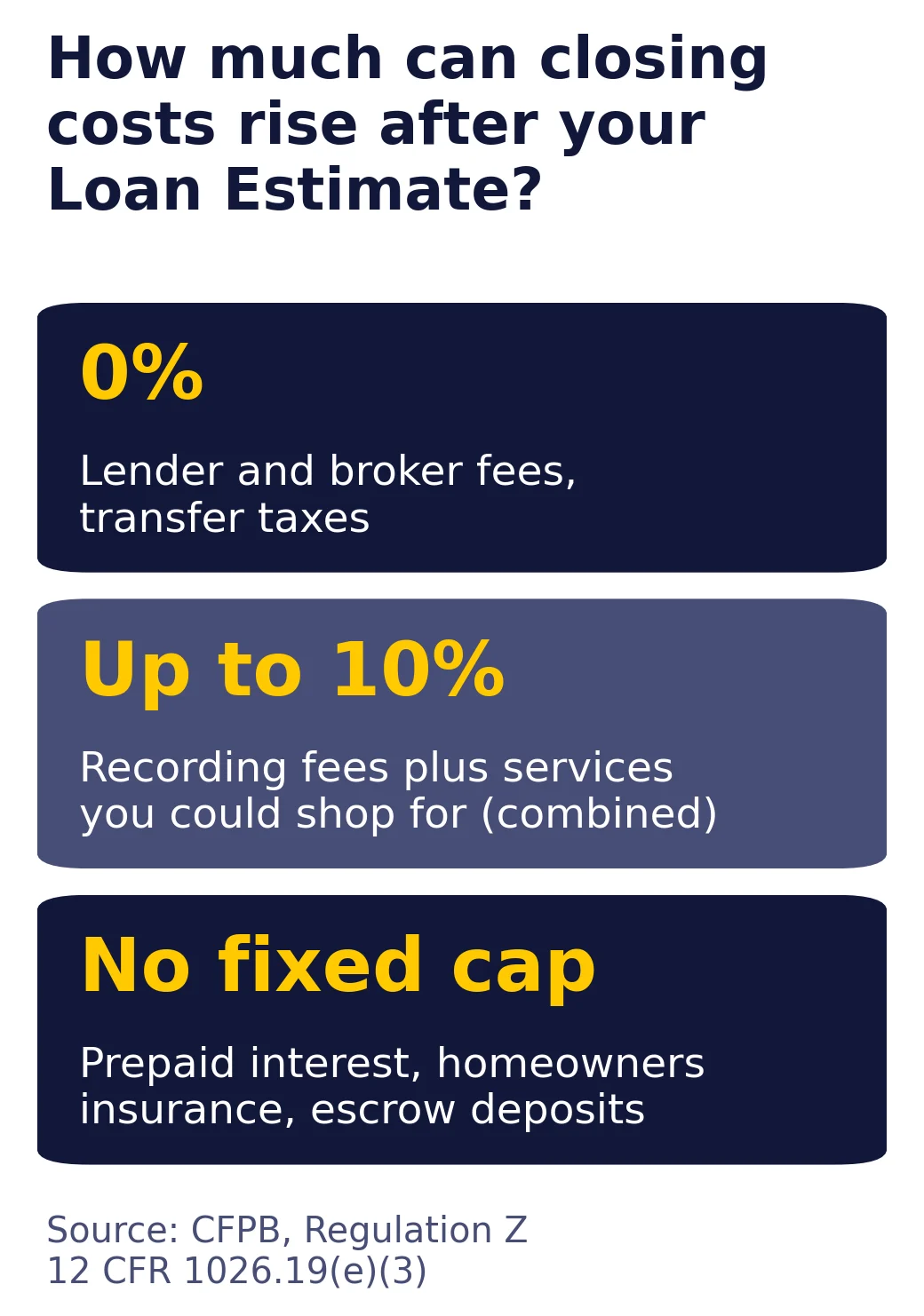
Some movement between your Loan Estimate and your Closing Disclosure is normal. Federal rules under the Truth in Lending Act and the Real Estate Settlement Procedures Act (the TILA-RESPA integrated disclosure rule) set clear limits on how much each type of charge can rise. Under Regulation Z, fees paid to the lender or a mortgage broker and transfer taxes generally cannot increase at all. Recording fees and third-party services you were allowed to shop for can rise, but only up to 10 percent in total. Prepaid interest, homeowners insurance, and escrow deposits have no fixed cap, as long as the lender used the best information it had at the time (CFPB, Regulation Z 12 CFR 1026.19(e)(3)).
Your Closing Disclosure must reach you at least three business days before you close (CFPB, What is a Closing Disclosure). Use those days to compare it with your Loan Estimate. A lender who cannot explain a fee increase in plain language, or seems annoyed that you asked, is treating you like a transaction to close and move on from.
Nobody Explained the Difference Between Your Loan Options
A mortgage is not one size fits all. A lender worth working with walks you through real tradeoffs instead of handing you a single product. If nobody showed you how a 15 year term compares with a 30 year term for your budget, or asked how long you plan to keep the property, a conversation was skipped. Seeing how a 15 year and a 30 year mortgage compare in Pennsylvania can change both your monthly payment and the total interest you pay over the life of the fixed-rate mortgage. A lender who skips this is optimizing for a fast close, not for your finances.
You Do Not Understand Who You Are Working With
There is a real structural difference between a bank, a mortgage broker, and a direct lender. It affects how many loan options you have, how fast decisions get made, and who you can reach when something needs attention. If you are not sure whether your loan officer works for a national bank, an independent broker, or a direct lender, read how a bank, a mortgage broker, and a direct lender differ. Learning the difference often explains the friction you are feeling partway through a loan.
Local Market Knowledge Is Missing
If you are buying or refinancing in a specific Pennsylvania community, a lender who knows that market, its property values, the loan programs buyers there use, and local closing timelines, can make the process smoother than one working from a national script. If your loan officer cannot speak to anything about your area, whether that is Levittown, Langhorne, Southampton, or Abington, that alone is not disqualifying. Combined with other signs on this list, it points to a lender built for volume over relationships.
You Feel Like You Cannot Ask Questions
Perhaps the biggest sign of all: you hesitate to call your lender because you expect to be rushed or made to feel like an inconvenience. A mortgage is a major financial decision, and it is reasonable to want things explained until you understand them. A lender who welcomes questions, even basic ones, is showing you the kind of relationship that holds up when something unexpected happens mid transaction.
What to Do If These Signs Sound Familiar
Start with your dates. If you are under contract, find your mortgage contingency deadline and closing date before you do anything else, because they do not move when your lender changes. Then put your concerns to your current loan officer in writing and ask for specific answers. If the answers do not come, or do not hold up, switching may be the right call. Our guide to mistakes to avoid when switching mortgage lenders mid purchase walks through deadlines, rate locks, credit checks, and fees, and our list of questions to ask a mortgage lender before you apply helps you vet the next one.
Why an Owner-Operated Lender Changes the Experience
Dynamic Funding Solutions works with home buyers, homeowners, self-employed borrowers, and real estate investors across Pennsylvania and Florida on purchases and refinances. We are owner operated, so the people who take your application see it through to closing. Your file does not pass between departments, and that continuity is what keeps fee questions, dropped documents, and stalled self-employed files from slipping through. Bank statement and alternative documentation loans are a core part of what we do, not an exception handled reluctantly.
Seeing these signs with your current lender? Talk to Dynamic Funding Solutions before your dates get tight.
Frequently Asked Questions
Is it too late to switch lenders if I am already under contract?
Often it is not. Buyers can switch lenders after signing an agreement of sale, especially early in the process. Your mortgage contingency deadline and closing date are the limits, so check them before you decide.
What is the difference between a mortgage broker and a direct lender?
A mortgage broker works with multiple lending sources to find loan options for you, while a direct lender funds the loan itself. Each has advantages depending on your situation.
Why do self-employed borrowers have a harder time getting approved?
Self-employed and 1099 income is documented differently than W-2 income, and not every lender has underwriting experience with bank statement or alternative documentation programs. A lender unfamiliar with them may flag qualifying income as a problem when it is not.
How much can fees change between my Loan Estimate and Closing Disclosure?
Under Regulation Z, lender and broker fees and transfer taxes generally cannot increase. Recording fees and third-party services you were allowed to shop for can rise up to 10 percent in total. Prepaid interest, homeowners insurance, and escrow deposits have no fixed cap.
Does it matter if I never talk to the same person twice at my lender?
It can matter a lot. Continuity reduces the chance of miscommunication, lost documents, or delays, especially near a rate lock expiration or closing date. If your file keeps changing hands, ask directly who is managing your loan.
If any of these signs feel familiar, whether you are mid purchase, mid refinance, or just comparing options, call Dynamic Funding Solutions at (215) 364-7171. We will look at your actual dates and loan scenario and tell you plainly what your options are.